
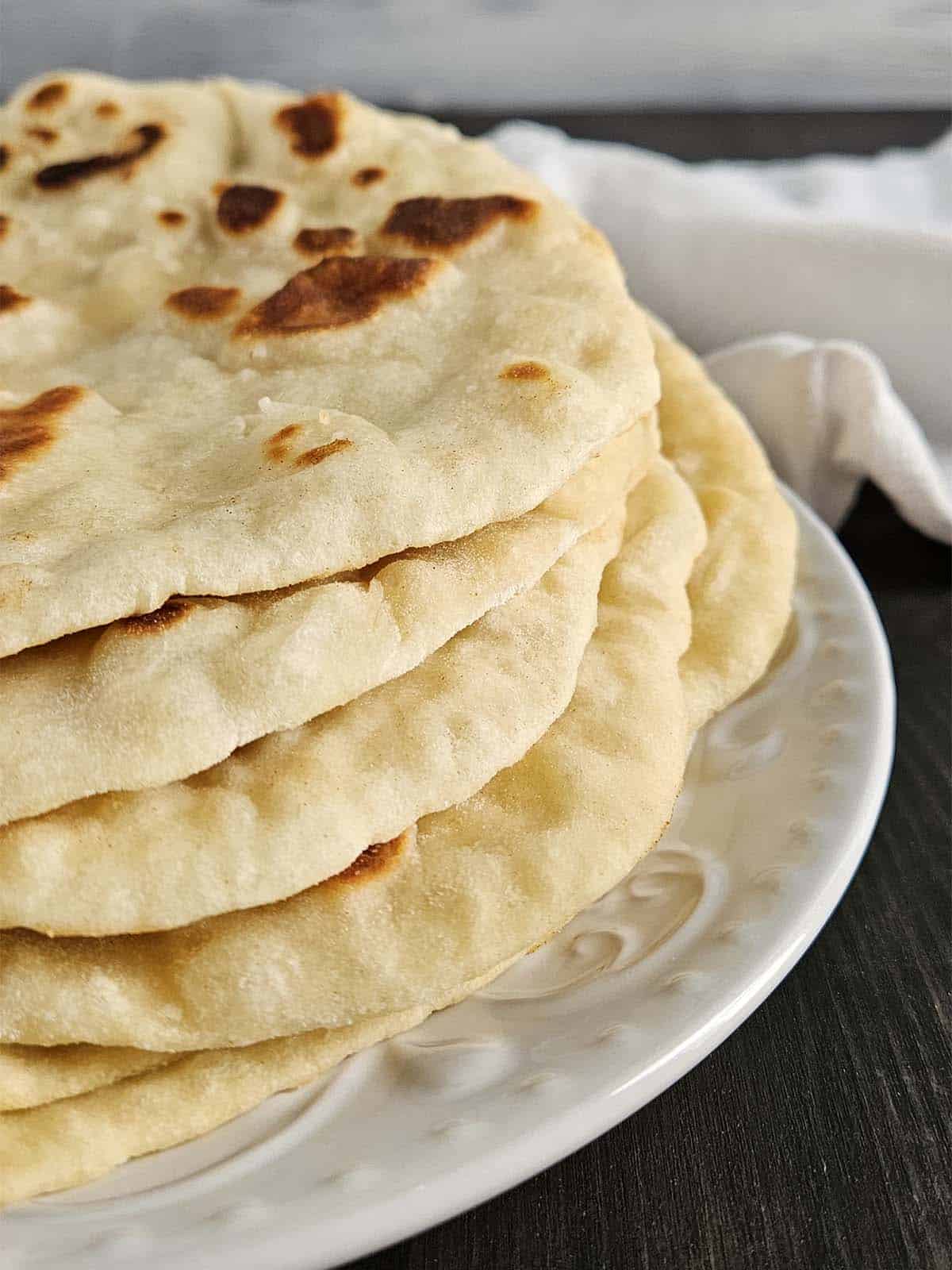
This sourdough discard flatbread is soft, flexible and incredibly easy to make with just six simple ingredients. It uses a full cup (240g) of sourdough discard and doesn't require any yeast or yogurt.
Mix the dough in one bowl, let it rest for 30 minutes, then roll and cook each flatbread in a hot skillet. The result is a stack of warm, slightly chewy flatbreads that are perfect for wraps, dipping or turning into quick flatbread pizzas.
I've been making this recipe since I first published it in 2020, and it has become one of the most popular recipes on Raspberries & Kohlrabi. I love it because it's simple, versatile and uses a generous amount of discard in one batch.

Why You Will Love This Recipe
- Uses 1 cup of discard. One batch uses a full 240g of sourdough discard.
- No yeast required. Baking powder provides a little lift, so there's no need to wait for yeast fermentation.
- No yogurt. Milk and sourdough discard give the dough the moisture it needs without yogurt.
- Ready in about an hour. The dough only needs a 30-minute rest before cooking.
- Versatile. Use the flatbreads for wraps, pizzas, dipping, quesadillas or alongside your favorite meal.
- Freezer-friendly. Freeze the dough or cooked flatbreads for later.
Jump to:
Can I Use Sourdough Discard Straight From the Refrigerator?
Yes. You can use sourdough discard straight from the refrigerator to make this flatbread. There's no need to feed it first or wait for it to become active.
If you happen to have active sourdough starter you'd like to use instead, that will work too.
If you're new to sourdough and aren't sure how the two differ, learn more about the difference between sourdough starter and sourdough discard.
Sourdough Flatbread Ingredients

Flour: Regular all-purpose flour works perfectly for this recipe. You could also substitute half of the flour with whole wheat flour.
Tip: The most accurate way to measure ingredient is by weight. If you don't have a digital scale, spoon the flour into the measuring cup and level it with the back of a butter knife. Try not to compress the flour into the measuring cup.
Salt: I add at least a pinch of salt to all of my recipes. Salt complements and intensifies the other flavors. For all of my recipes, I use Morton Kosher Salt which packs more densely than Diamond Crystal Kosher Salt. If you are using Diamond Crystal Kosher Salt you will want to double the amount of salt you add.
Baking Powder: Baking powder provides additional leavening and helps create the characteristic bubbles that form as the flatbread cooks.
Sourdough Discard: This recipe uses 1 cup (240g) of sourdough discard from a 100% hydration starter. You can use discard straight from the refrigerator-there's no need to feed it first.
Pro Sourdough Tip: Keep a glass jar in your refrigerator to store your sourdough discard. Continue adding to it until you're ready to bake with it. Not sure what to make? Find a sourdough discard recipe based on how much you have.
Milk: Milk adds moisture and flavor to the dough. For a dairy-free version, substitute your favorite unsweetened non-dairy milk or use water.
Olive Oil: A small amount of olive oil helps keep the flatbreads soft and pliable.
Substitutions and Variations
Plain sourdough flatbread is great on its own but feel free to add additional herbs and spices for even more flavor.
- Garlic Herb Add finely chopped garlic cloves to the olive oil that you brush on before placing the flatbread in the pan, then sprinkle with your favorite fresh herbs when you remove them.
- Roasted Garlic: add 2 chopped roasted garlic cloves when you mix the flatbread dough.
- Garlic Sesame: Sauté 2 chopped garlic cloves and 2 tablespoons of sesame seeds in the olive oil before mixing the dough.
- Onion Herb: Add ¼ cup finely minced onion to the dough along with 1 tablespoon of fresh or 1 teaspoon of dried herbs.
- Cinnamon and Sugar: Spread cooked flatbread with butter and sprinkle with cinnamon and sugar.
- Dairy-Free: Substitute unsweetened non-dairy milk or water for the milk. If you use water, the dough may be slightly softer and the finished flatbread won't be quite as flavorful.
How To Make Sourdough Discard Flatbread
This sourdough flatbread is super simple to make just mix, roll, and throw it into a hot skillet.

Step 1: Whisk the dry ingredients. In a large bowl, whisk together the flour, kosher salt and baking powder. Add the sourdough discard, milk and olive oil.

Step 2: Mix the dough. Stir until the ingredients come together into a shaggy dough.

Step 3: Knead the dough. Turn the dough out onto a lightly floured surface and knead for a few minutes, until it is smooth and no longer sticky. If the dough is still sticky, add additional flour a little at a time as needed.
Rest the dough. Shape the dough into a ball, return it to the bowl and cover with plastic wrap. Let the dough rest at room temperature for 30 minutes. This allows the gluten to relax, making the flatbreads easier to roll out.

Step 4: Divide the dough. Divide the dough into 6 equal pieces.
Tip: Don't skip the rest. Giving the dough 30 minutes to rest allows the gluten to relax, making the flatbreads much easier to roll out.

Step 5: Roll the flatbreads. On a lightly floured surface, use your hands or a rolling pin to roll each piece into a thin round about ¼-inch thick.

Step 6: Cook the flatbreads. Heat a cast-iron skillet over medium-high heat. Brush one side of a flatbread with olive oil and place it oil-side down in the hot skillet. Cook for about 90 seconds, or until the top begins to look dry and bubbly. Brush the top with olive oil.
Flip and cook the second side for about 1 minute. Transfer the cooked flatbread to a plate and cover with a clean kitchen towel.
Tip: If flour begins to build up in the skillet, carefully wipe it out with a damp paper towel before cooking the next flatbread.
Tip: Keep the skillet over medium-high heat. A properly heated skillet helps the flatbread cook quickly and develop those characteristic browned spots while staying soft and pliable.
Tip: Cooking for a crowd? Use a large electric griddle to cook several flatbreads at once.

Step 7: Repeat. Continue cooking the remaining flatbreads, keeping the finished flatbreads covered until ready to serve.
Tip: Keep the cooked flatbreads covered with a clean kitchen towel while you finish the batch. This traps a little steam and helps keep them soft and pliable.

How to Serve Sourdough Flatbread
Sourdough flatbread is incredibly versatile. Serve it warm with your favorite dip, use it as a wrap or turn it into a quick flatbread pizza.
- Serve it with a dip: Cut the flatbread into wedges and serve with hummus, pesto or olive oil mixed with fresh herbs and garlic.
- Make a flatbread pizza: Add your favorite sauce, cheese and toppings, then bake until the cheese is melted. Try my Shrimp Scampi Flatbread Pizza or Buffalo Chicken Flatbread for inspiration.
- Breakfast wraps: Fill with scrambled eggs, sautéed potatoes, cheese and your favorite breakfast meat.
- Flatbread wraps: Fill with salad, hummus, meat, cheese or pickled vegetables. Your Greek chicken kebobs would still make a nice contextual link here.
- Make a quesadilla: Add cheese and your favorite fillings to one half, fold and cook in a skillet until golden brown and the cheese has melted.
- Serve with soup: Use it for dipping into a bowl of soup. I'd keep one or two relevant soup links here rather than removing them altogether.
Make-Ahead, Storage, and Freezing Instructions
Room Temperature: Store cooled flatbreads in an airtight container or zip-top bag at room temperature for up to 2 to 3 days.
Refrigerator: For longer storage, keep the flatbreads in an airtight container or zip-top bag in the refrigerator for up to 5 days. Reheat before serving to restore their soft, pliable texture.
To Freeze the Dough: After kneading the dough, divide it into 6 equal portions. Wrap each portion individually in plastic wrap, place them in a freezer-safe bag and freeze for up to 1 month.
When you're ready to make flatbread, remove the number of portions you need and allow them to thaw completely. Then roll and cook according to the recipe instructions.
To Freeze Cooked Flatbread: Allow the flatbreads to cool completely, then place them in a freezer-safe bag or container. Freeze for up to 3 months.
To Reheat: Warm the flatbread in a skillet over medium heat for a minute or two on each side. You can also reheat it in a 350°F oven until warmed through or microwave it briefly.
Recipe FAQ
The amount of sourdough flavor will depend on the age of your discard. Older discard generally develops a stronger, tangier flavor than freshly fed starter or newer discard.
Yes. This sourdough flatbread doesn't require yogurt. Milk provides the additional liquid needed for the dough, but you can also use unsweetened non-dairy milk or water.
Sourdough flatbread can become tough if too much flour is added to the dough, the dough isn't allowed to rest or the flatbread is cooked for too long. The dough should be soft and slightly tacky after kneading. Let it rest for the full 30 minutes before rolling, then cook the flatbreads quickly in a hot skillet over medium-high heat.
📖 Recipe

Sourdough Discard Flatbread
Equipment
- mixing bowl
- Rolling Pin
Ingredients
- 2 cups all-purpose flour
- 1 teaspoon Morton kosher salt (or 2 teaspoons Diamond Crystal kosher salt)
- 1 teaspoon baking powder
- 1 cup sourdough discard
- ½ cup milk
- 1 tablespoon olive oil plus extra for cooking
Instructions
- Whisk the dry ingredients. In a large bowl, whisk together the 2 cups all-purpose flour, 1 teaspoon Morton kosher salt and 1 teaspoon baking powder. Add the 1 cup sourdough discard, ½ cup milk, and 1 tablespoon olive oil . Stir until the ingredients come together into a shaggy dough.
- Knead the dough. Turn the dough out onto a lightly floured surface and knead for a few minutes, until it is smooth and no longer sticky. If the dough is still sticky, add additional flour a little at a time as needed.
- Rest the dough. Shape the dough into a ball, return it to the bowl and cover with plastic wrap. Let the dough rest at room temperature for 30 minutes. This allows the gluten to relax, making the flatbreads easier to roll out.
- Divide the dough. Divide the dough into 6 equal pieces.
- Roll the flatbreads. On a lightly floured surface, use your hands or a rolling pin to roll each piece into a thin round about ¼-inch thick.
- Cook the first side. Heat a cast-iron skillet over medium-high heat. Brush one side of a flatbread with olive oil and place it oil-side down in the hot skillet. Cook for about 90 seconds, or until the top begins to look dry and bubbly. Brush the top with olive oil.
- Flip and finish cooking. Flip the flatbread and cook the second side for about 1 minute. Transfer it to a plate and cover with a clean kitchen towel to help keep it soft and pliable.
- Repeat. Continue cooking the remaining flatbreads, keeping the finished flatbreads covered until ready to serve.
Notes
- Measure the flour carefully. For the most accurate results, weigh your flour with a kitchen scale. If measuring by volume, use the spoon-and-level method rather than scooping directly from the flour container.
- If the dough is sticky after kneading, add additional flour a little at a time. Avoid adding too much flour, which can make the finished flatbread tough.
- Don't skip the 30-minute rest. Resting gives the gluten time to relax and makes the dough easier to roll.
- If flour begins to build up in the skillet, carefully wipe it out with a damp paper towel before cooking the next flatbread.
- Keep the skillet over medium-high heat so the flatbreads cook quickly and develop browned spots without drying out.
- Keep cooked flatbreads covered with a clean kitchen towel while you finish the batch.
- Cooking for a crowd? Use a large electric griddle to cook several flatbreads at once.
Chris says
Hi,
Maybe I'm not reading it right but I'm looking at the recipe and it doesn't say when to add the sourdough discard but I imagine that's in the first step as it's meant to be a dough by the second step?
Sorry, I'm a novice at all this.
Erica @ Raspberries and Kohlrabi says
This is truly an "it's not you, it's me" moment. The directions were confusing and I have clarified them. I hope your flatbread turned out well.
Beryl says
I made this tonight for a happy hour snack and everyone enjoyed it, including our 10 year old son. It was super easy to make and tasted delicious. I love knowing that I can enjoy it, being gluten intolerant.
Erica @ Raspberries and Kohlrabi says
I am happy to hear you enjoyed it! Thank you for stopping by.
Leanne says
Just made these tonight. Super easy and my kids loved them. Definitely going to make them again. Thank you!!!
Erica @ Raspberries and Kohlrabi says
Yay! I am so glad to hear you liked them. Thank you so much for stopping by.
Jessica says
Can I use water in place of milk?
Erica @ Raspberries and Kohlrabi says
Water will probably work. It might affect the browning and they may not be as tender.
Jimmy says
I’ve made these twice now. The first time, I served them with hummus. The second time, I meal-prepped a bunch of mini pizzas. After waiting for the flatbreads to cool, I added toppings and froze them. They’re a cheaper alternative to buying frozen gluten-free and vegan pizzas.
Erica @ Raspberries and Kohlrabi says
I am so happy to hear you like them. Thank you so much for stopping by.
Blanca says
This looks simple and delicious! Thank you for sharing!
Erica @ Raspberries and Kohlrabi says
I'm glad you liked it. Thanks so much for stopping by.
Margie says
Nice easy recipie. First time trying this.
Erica @ Raspberries and Kohlrabi says
I'm so happy you like it. Thanks for stopping by.
Nadya says
Hi Erica! Thank you for sharing this recipe!
A few questions as im a newbie baker keen in exploring sourdough.
1) Should the milk & discard be at room temperature or it’s fine if it’s straight out of the refrigerator?
2) will the structure of the flatbread be affected if my discard is made from white flour & rye i.e. will i need to add more milk?
Thank you in advanced! ☺️
Erica @ Raspberries and Kohlrabi says
Hi Nadya, Thanks for stopping by. Straight out of the refrigerator should be just fine for both the milk and discard. I haven't worked with rye flour before so I can't say for sure. As the recipe is written the dough will be a bit wet in anticipation of the flour that it will absorb as you knead it. When kneaded the dough should come together in a nice smooth ball without being overly sticky and hard to handle. Let me know how the rye flour works out.
Trish Allin says
Hi Nadya. This morning I made this recipe for the first time. My discard is half bread flour and half rye flour. The naans were good and I added chopped chives and garlic but I think I made them too thick. Otherwise, I believe that the rye/white flour worked OK. Did you make the recipe?
Monika says
Can I use almond or oat milk instead?
Erica @ Raspberries and Kohlrabi says
Yes, either milk should work just fine.
Milton says
FYI, being the rebel that I am, I used keffir instead of milk. This resulted in a tangy, more sour-doughy taste.
Erica says
That sounds yummy! I am glad it worked out.
Dana Therrian says
I mixed starter with intent of making crackers but I'm wondering if it'd turn out if made it as naan? I mixed it after I fed starter with 1.5 cups flour, chives, basil, rosemary, salt, pepper, and olive oil... should I add milk and baking powder?
Erica @ Raspberries and Kohlrabi says
It would depend upon the consistency of the dough. If it is already stiff similar to pie crust or sugar cookie dough it is very hard to add additional ingredients at this stage. If it is still pretty liquidy you could add some baking powder and milk but you will also need to add some additional flour to get it to a reliable consistency.
Paulette Holmes says
Nice easy recipie. First time trying this. I only have regular baking powder but worked great. Next time roll them I a bit thinner and will add some flavoring.
Thank you for the recipie
Erica @ Raspberries and Kohlrabi says
Thanks for stopping by!
Diane says
The recipe calls for 2 cups flour or 240 grams? Thanks.
Erica @ Raspberries and Kohlrabi says
You should use 2 cups of flour which is equal to 240 grams. I have included both volume and weight measurements to accommodate different ways of measuring ingredients.
Mohamed says
Sorry it says 1 cup sourdough discard (240 grams)
Is it one cup or 2 cups discard
Thank you for a great recipe
Erica @ Raspberries and Kohlrabi says
You should use 1 cup of sourdough discard which is equal to 240 grams.
Michael says
Neither 1 cup or 2 cups of flour equals 240 grams. So I'm curious did you use cups (2, I assume) or grams? Just so I can more faithfully reproduce what you did.
Erica says
When baking I always prefer to use weight rather than volume measurements. They are more accurate. A "cup" of flour can have many different weights depending upon who is measuring it and the method they use to fill the cup. I know not everyone has a kitchen scale so I provide volume measurements for those who need them. When converting my weight measurements to volume measurements I rely upon this useful chart from King Arthur Baking. https://www.kingarthurbaking.com/learn/ingredient-weight-chart According to their chart one cup of flour weighs 120 grams.
Rachid says
Thank you Erica,
Made this tonight and it turned really well. I wonder if I can prepare the same and leave over night Inside the fridge to proof and cook it in the morning. And if so, should I leave it out for a while after taking it out or can I cook it straight out of the fridge?
I’m a newbie to baking so I’m trying to learn but by bit. Thank you
Erica @ Raspberries and Kohlrabi says
Since sourdough discard is at the end of its rise cycle, most of the rise in this recipe comes from the baking powder. Proofing in the fridge probably won't cause it to rise much more. There are two different types of baking powder single-acting and double-acting. It should say on the container which type you have. Both types are activated when they are mixed with a liquid. My worry is if you have single-acting baking powder it will use up all of its rising power overnight in the fridge. If you have double-acting baking powder it will be activated a second time by the heat of the pan and should work just fine.
Susan Grant says
Great recipe! I used 25% multigrain flour and it was perfect. Next time I’ll go 50%.
Erica @ Raspberries and Kohlrabi says
That is really great to hear! It is a really forgiving recipe. Great Tip! I hope to start experimenting with a variety of flours as I continue to make these.