
I love shopping at a farmers market. I can buy super fresh local food while enjoying beautiful weather.
Just like sweet corn on the cob, juicy watermelon, and fresh tomatoes farmers markets are a summertime staple. I feel inspired by new ingredients and have an opportunity to learn some cooking tips by talking with the farmers.
It is also a great way to purchase quality food and support my local market and small businesses.

Jump to:
- What is a Farmers Market?
- 1. Know the Rules
- 2. Know What Produce is In-Season
- 3. Expect Greater Variety
- 4. Plan a Menu
- 5. Wear Comfortable Shoes
- 6. Be Prepared For the Weather
- 7. Come Prepared
- 8. Leave your dog at home
- 9. Set a budget
- 10. Take a quick stroll around the market
- 11. Respect the produce
- 12. Talk with the farmers and staff
- 13. Avoid Unscrupulous Vendors
- 14. Plan to Spend a Few Hours There
- 15. Try Before You Stock Up
- 16. Share how you have used their items
- 17. Understand how to use whole vegetables
- 18. Know How to Identify the Best Produce
- 19. Learn to Love "Ugly" Produce
- 20. Buy Plants
- 21. Shop Early
- 22. Shop late
- 💬 Comments
What is a Farmers Market?
A farmers market is a central location where local small farms can sell their homegrown fresh fruits and vegetables directly to consumers. Most farmers markets have individual stalls for each vender.
Produce at a farmers market is often fresher because it has traveled shorter distances than produce found at grocery chains.
Local produce isn't the only thing you will find at a farmers market. It is a great place to purchase locally raised meat, homemade baked goods, canned goods such as jams and sauces, and often crafts such as homemade soaps, candles, and textiles.
When I first started shopping at farmers markets I remember feeling a little intimidated. I am not a naturally social person especially when surrounded by people I don't know.
Here are some tips to help you feel more comfortable and make the most of your next trip to the farmers market.
1. Know the Rules
Many farmers markets have guidelines posted at the main entrance and on their websites and social media. They may have health guidelines or rules against bringing pets whom are not service animals.
2. Know What Produce is In-Season
No matter what season it is you can pretty much find just about any type of produce at your local grocery store. But, you won't have as many options at a farmers market.
One of my favorite things about shopping at my local farmers market is how fresh all of the produce is. That's because most of the time what you are buying was picked right before it was brought to the market.
But because all of the produce is grown locally you won't find tomatoes in the winter. It is helpful to know what to expect by knowing what produce is currently in season.
Keep an open mind when shopping. Items available at a farmers market will vary from week to week.

3. Expect Greater Variety
While you will be limited to produce that is currently in season, that doesn't mean there won't be a huge variety of produce to choose from.
Grocery store produce has been selected for qualities like pest resistance, uniform size, and the ability to travel without much loss in quality.
Local farmers are able to choose a variety based on flavor, texture, and quality. Many farmers choose to grow heirloom varieties of vegetables.
For example, there are more than 3,000 varieties of heirloom tomatoes, which means you should have several varieties to choose from.
4. Plan a Menu
Once you know what produce is currently in-season, plan a menu for the week. This way you will know what you are looking for and how much you need during your shopping trip.
For seasonal cooking, I love the cookbook The Fresh 20: 20-Ingredient Meal Plans for Health and Happiness 5 Nights a Week. The book is divided by season and contains weekly meal plans that use just 20 seasonal ingredients (plus pantry staples) each. What I really love about the book is that if one recipe calls for half a head of cauliflower a later recipe will usually use up the remaining half a cauliflower.
Having a shopping list will keep you from overbuying produce and wasting money on food you don't need or can't use before it spoils.
While having a plan is a good idea, be prepared for a few impulse buys when you see a new fruit or something really delicious but unexpected.

5. Wear Comfortable Shoes
Depending upon the farmers market you are visiting you may be doing quite a bit of walking. The last thing you want is sore feet at the end of the day.
6. Be Prepared For the Weather
You might also want to wear a hat, sunscreen, bring a water bottle, and maybe an umbrella.
Farmers markets are typically outdoors and are most common during the summer when the growing season is at its peak. Weather can be unpredictable.
It can be very hot one day and raining the next. Farmers markets typically happen rain or shine so it is best to check the weather and come prepared.
If you do come on a rainy day, expect smaller crowds and possible a better deal.

7. Come Prepared
If you know you will be purchasing a lot of food consider bringing your own folding shopping cart, I bought one while we were living in Chicago which Tom affectionately nicknamed my "Granny Cart."
Bring your own reusable bags. Some vendors may offer plastic bags but it is nice to have your own.
Many farmers market vendors now accept debit or credit cards and some even accept snap benefits like EBT cards or food stamps. But some may still be "cash only." Bring small bills so that the farmers don't have to make change for larger bills especially if you will be going early in the day.
If you won't be going straight home, bring a cooler with you so your items won't spoil in a hot car.
8. Leave your dog at home
Many farmers markets don't allow dogs due to health and safety laws.
Our farmers market does allow dogs and I have brought mine a time or two. But having him there made it more difficult to shop and talk with the farmers because I was always worried about making sure he was on his best behavior.
9. Set a budget
If you tend to overspend, bring only the amount of money you wish to spend with you. I know how easy it is to get carried away when you are surrounded by delicious food.
10. Take a quick stroll around the market
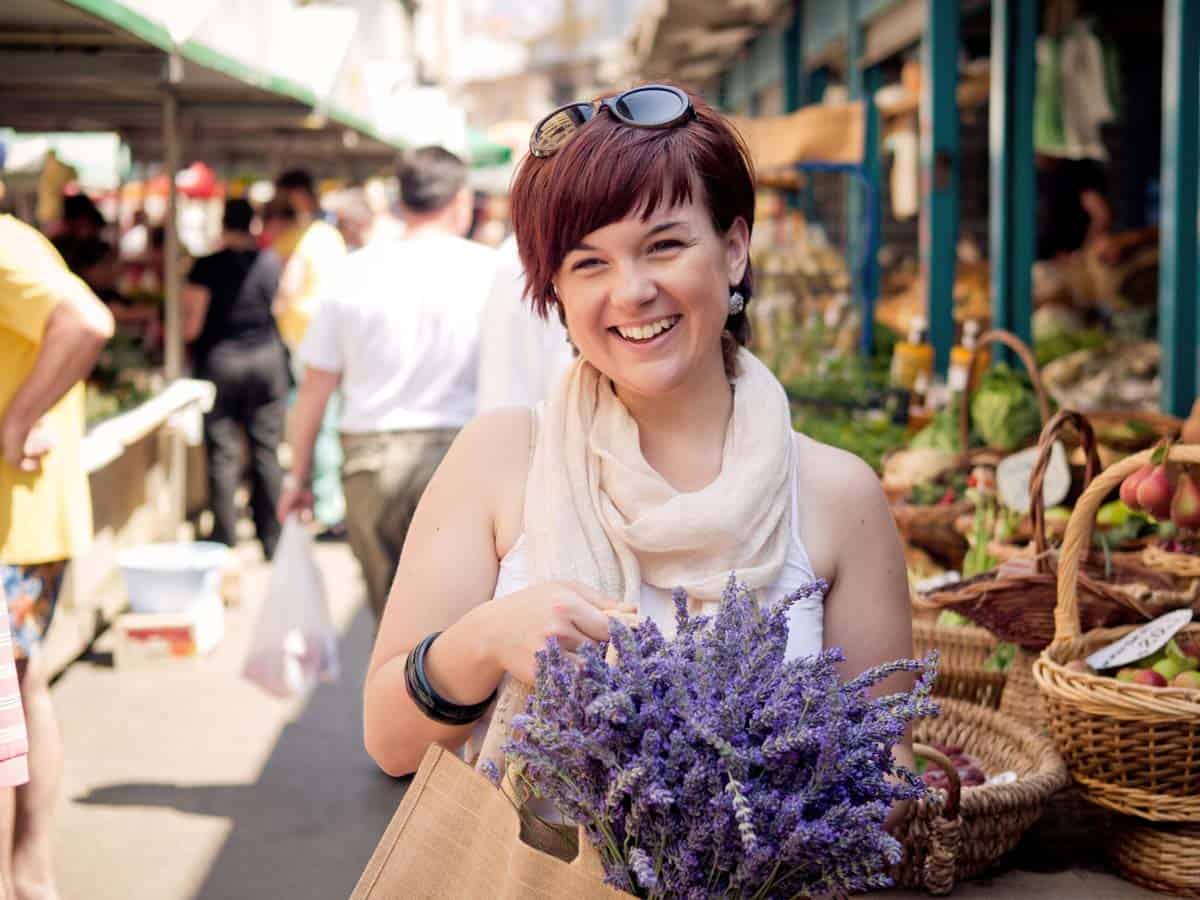
When you first get to the market, walk through the entire market noting what is available and prices.
Nothing is worse than buying a pint of strawberries only to see it for a dollar cheaper two booths down.
If the venue is a larger one, the entrance or website might have a free map or list of vendors.
11. Respect the produce
If you are not sure how ripe something is don't squeeze it you will cause bruising.
Produce at a farmers market is selectively picked at its prime. You can safely assume that if it's not already ripe, it will be within the next day or two.
You can also smell fruit near the stem end. Unripe fruit will have little to no aroma, ripe fruit will smell sweet,
If you are still unsure just ask the farmer. This brings me to my next tip.

12. Talk with the farmers and staff
Ask questions.
Farmers markets offer a great opportunity to talk with the people who grew or raised each item.
Of course, be respectful of the fact that they are working, but many of the small farmers are very passionate about what they do and most of them will be more than happy to talk with you. They will often have preparation or storage tips and can even share new recipes.
Last week I bought a jar of homemade pear jam. I started talking with the farmer about the different jams he was selling and he told me his favorite thing to do with them was to use them as a glaze when he smoked meat. I never would have thought to try that.
Not sure what to talk with them about? Here are a few questions to get you started.
- Where is your farm located?
- How long have you been farming?
- What other fruits and vegetables do you grow?
- When was this fruit or vegetable picked?
- Ask about their farming practices. Was this produce grown without pesticides? If so, what do you use to keep insects at bay?
- How should I store and prepare this food?
- Do you have any favorite recipes using this item?
- What produce do you have coming up next month?
- What grazing practices do you use with your livestock?
13. Avoid Unscrupulous Vendors
Overall most vendors at the farmers market will be legitimate. However, there may be a bad egg or two.
Most farmers market vet their vendors making decisions about who is allowed to participate and what types of goods are offered. Making sure that each vendor is the actual grower or producer of what they sell.
Knowing what is in season is helpful to avoid vendors who buy bulk produce and try to sell it at a farmers market.
If a vendor can't or won't answer your questions that could also be another red flag that your money may be better spent somewhere else.
14. Plan to Spend a Few Hours There
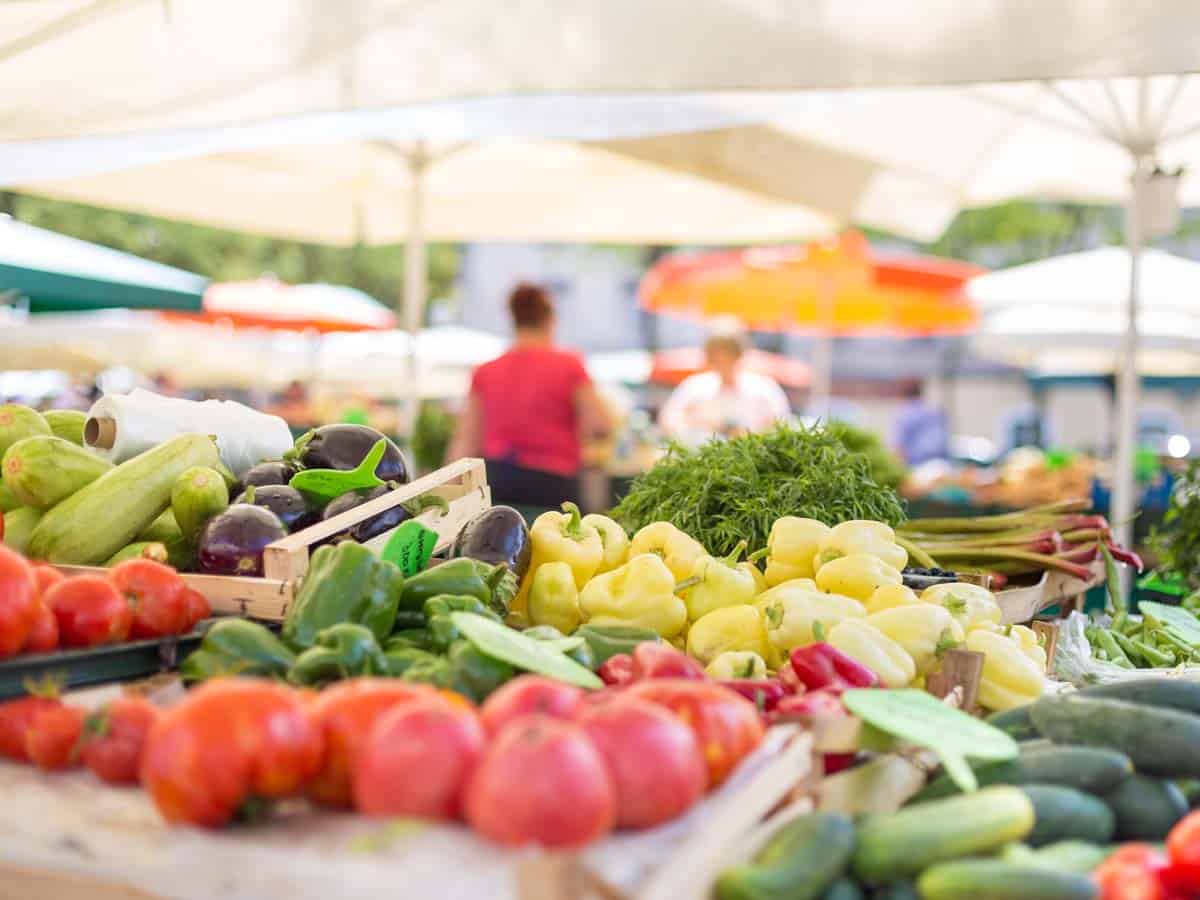
As farmers markets have become more popular more and more vendors are signing up. Often there are vendors selling other specialty items like locally raised meat, homemade baked goods, canned goods such as jams and sauces, and often crafts such as homemade soaps, candles, and textiles.
There is also usually live music, kids' activities, and food trucks.
15. Try Before You Stock Up
Try small portions of new ingredients. Take them home and cook, with them before buying a larger amount. Make sure you like it before buying more and wasting money on something you don't like to eat.
16. Share how you have used their items
Report back to vendors how delicious an item you bought last week was and how you used it. This will help to build your relationship with them.
A good friend of mine frequently shares baked goods with the farmers at her local CSA that she makes using the produce they sold her the previous week.
17. Understand how to use whole vegetables
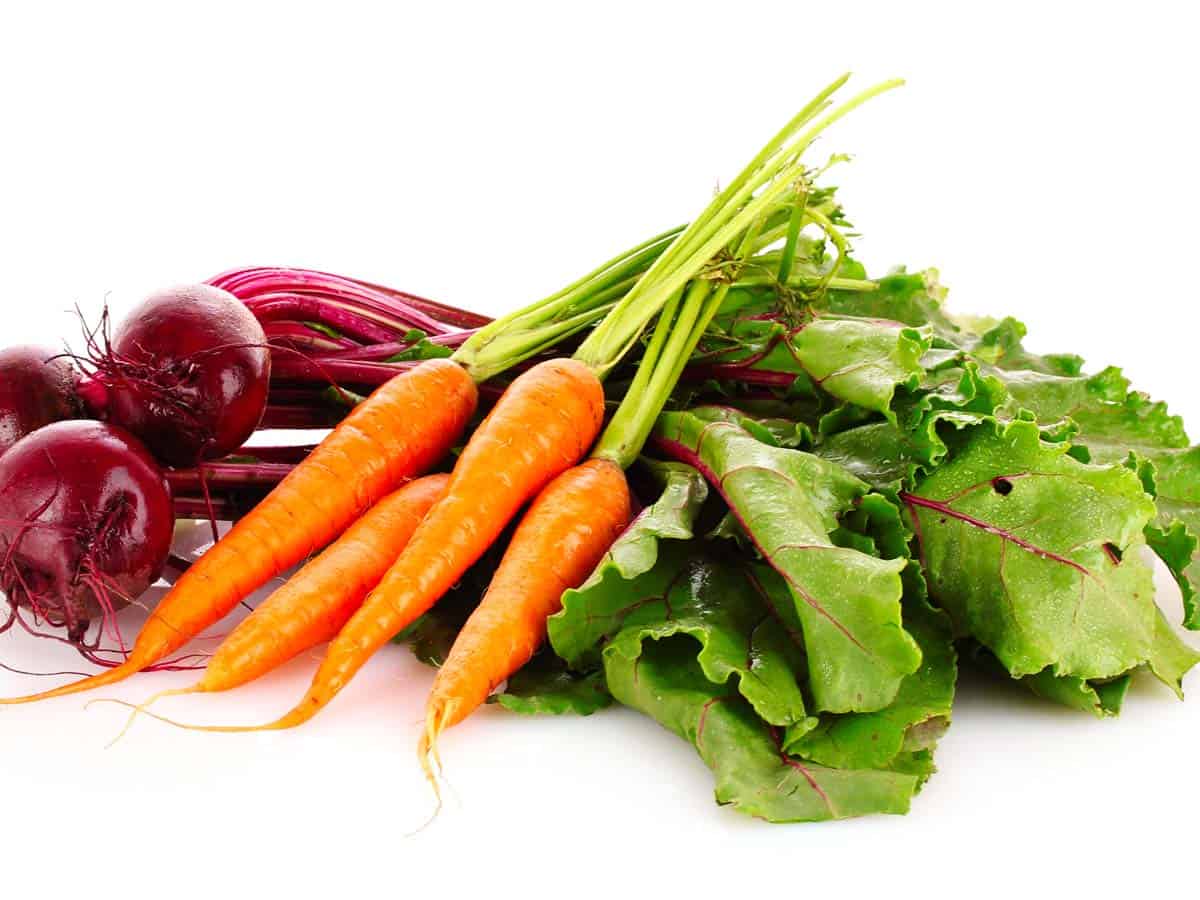
Often vegetables will be sold untrimmed with the greens still attached. Items typically last longer this way, but more importantly, most greens are edible.
They can be used to make a delicious pesto or served simply sauteed in a little olive oil with some fresh garlic, salt, and pepper.
18. Know How to Identify the Best Produce
While a majority of the produce at the farmers market should be high quality it's helpful to know what to look for when choosing the best produce.
In general, produce should be firm with a slight give, heavy for its size, and free from scrapes, bruises, and mold.
19. Learn to Love "Ugly" Produce
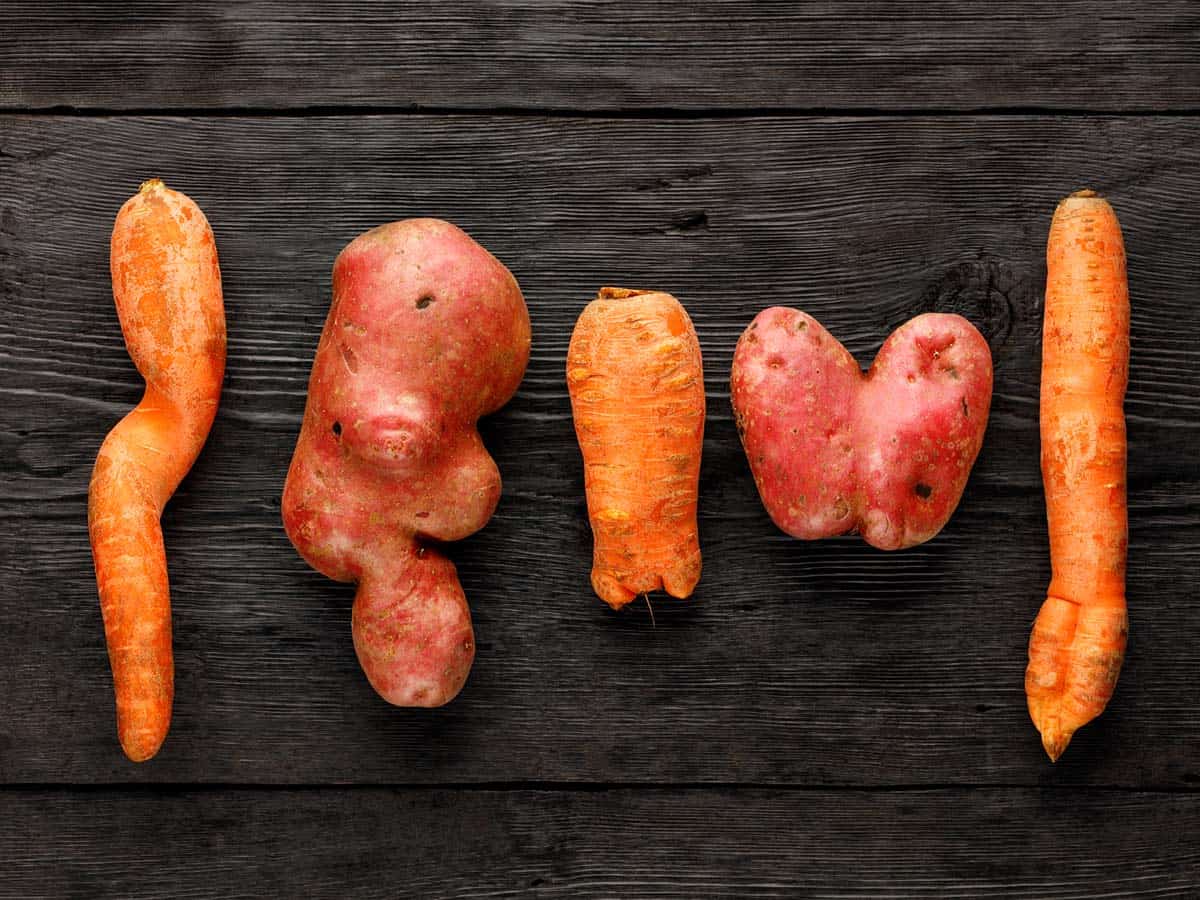
Many farm stands sell "seconds," produce at a discounted price that is slightly bruised or not as large as the full-priced items. You may see twisted carrots or oddly shaped strawberries, peppers, and tomatoes. But just because the produce is oddly shaped doesn't mean it doesn't still taste delicious.
Companies like Misfits Market and Imperfect Foods have created whole businesses around selling produce that was deemed too "ugly" for the grocery store.
As a bonus often most of the most mishappen produce is available at a lower price. These items are great for canning and in truth, we chop up most produce before eating it so you may never notice it was oddly shaped

20. Buy Plants
Many farmers markets also sell plants and cut flowers. There are usually a variety of fruit and vegetable starters as well as lots of flowering plants.
You can often find a larger variety of plants than what you would find at a typical store with many vendors focusing on heirloom varieties.
21. Shop Early
If you want to avoid the crowds and have the best selection, go when the market first opens.
Many vendors will sell out of their best produce early in the day. Certain items like berries, corn, peas, and heirloom tomatoes are in high demand and often disappear first.
Keep in mind most vendors won't be willing to negotiate prices early in the day so be prepared to pay the asking price.
22. Shop late
If you want the best deals, shop just before the market closes. Many of the items are perishable and anything not sold the farmers will have to pack up and take with them.
For this reason, many farmers are willing to make deals at the end of the day. However, understand that farmers grow and raise this food to make a living. So don't expect or ask for too deep of a discount.
Note that some markets have rules against end-of-the-day discounts.
What other tips do you have for shopping at farmers markets?
Thanks for Reading!
If you try this recipe, let me know! Leave a comment and rate it below! You can also snap a picture and post it on Facebook or Instagram be sure to tag me @RaspberriesandKohlrabi.
Subscribe to get more recipes and tips by email.


Victoria Addington says
Thanks for your useful tips on how to shop at a local food market. I've been thinking of purchasing some goods for the family that is enough for a week's worth. Since I tend to overspend, I shall then follow your advice to make a budget and bring only the amount of money I intend to spend. Besides, I guess it would be better to research about what produce is in the season so I can list them too.
Erica @ Raspberries and Kohlrabi says
Thanks for stopping by. I love farmers markets. They are a great way to find new foods and talk with people who know how to prepare them. Plus the only way to get fresher produce is to grow it yourself.